


© 2026 The Japanese Society for Horticultural Science (JSHS).
ISBN: 978-4-87974-803-4 C3045
* From September 1st, 2027, viewing, downloading, and printing the color PDF will be available on J-STAGE
PREFACE p.ix
I. GENERAL
-
- I-1. A Centennial Progress of the Japanese Society for Horticultural Science p.1
- I-2. The Japanese Personality and Horticultural Products
- I-3. Land and Natural Conditions
- I-4. Marketing System of Horticultural Crops
- I-5. Horticultural Statistics of Japan
II. FRUIT TREES
- II-1. Citrus
- II-2. Apple
- II-3. Grape
- II-4. Pears
- 1. European Pear
- 2. Japanese Pear
- II-5. Stone Fruits
- 1. Peach
- 2. Cherry
- 3. Japanese Apricot, Plum and Apricot
- II-6. Persimmon
- II-7. Other Fruit
- 1. Japanese Chestnut
- 2. Loquat
- 3. Berries
- 4. Kiwifruit
- 5. Tropical Fruits
- 6. Fig
- II-8. New Technology for Fruit Trees
- 1. Application of DNA Markers and Breeding Techniques to Practical Fruit Breeding
- 2. Current State in Fruit Processing Industries and Changes in Consumer Preference
- 3. Health Effects of β-Cryptoxanthin Present in Abundance in Japanese Citrus Fruits
- 4. Smart Agriculture for Fruit Trees
- 5. The Tree Joint Training System for Fruit Trees
- 6. Growing Fruit Trees in Greenhouses
III. VEGETABLES
- III-1. Strawberry
- III-2. Tomato
- III-3. Eggplant
- III-4. Sweet Pepper
- III-5. Cucumber
- III-6. Watermelon
- III-7. Melon
- III-8. Pumpkin and Squash
- III-9. Okra
- III-10. Sweet Corn
- III-11. Garden Pea
- III-12. Vegetable Soybean
- III-13. Green Bean
- III-14. Onion
- III-15. Bunching Onion
- III-16. Chinese Chive
- III-17. Cabbage
- III-18. Broccoli
- III-19. Chinese Cabbage
- III-20. Komatsuna (Brassica rapa var. perviridis)
- III-21. Lettuce
- III-22. Spinach
- III-23. Asparagus
- III-24. Japanese Radish
- III-25. Carrot
- III-26. Edible Burdock
- III-27. Lotus Root
- III-28. Ginger
- III-29. Garlic
- III-30. Potato
- III-31. Sweet Potato
- III-32. Chinese Yam
- III-33. Taro
- III-34. Vegetables Unique to Japan
- 1. Garland Chrysanthemum (Glebionis coronaria)
- 2. Japanese Honewort (Cryptotaenia canadensis)
- 3. Perilla (Perilla frutescens)
- 4. Japanese Butterbur (Petasites japonicus)
- 5. Myoga (Zingiber mioga)
- 6. Wasabi (Eutrema japonicum)
- 7. Bamboo Shoot (Phyllostachys spp.)
- III-35. Shiitake (Lentinula edodes)
- III-36. New Technology for Vegetable
- 1. Breeding
- 1-1. Vegetable Breeding in Japan
- 1-2. Development of Highly Clubroot-Resistant Chinese Cabbage F1 Cultivar, ‘Akimeki’, Accumulating Resistance Genes Crr1, Crr2, and CRb
- 1-3. An Introduction to Parthenocarpy Trait
- 1-4. Production of Seedless Watermelon Using Soft X-ray Irradiated Pollen
- 1-5. Development of Seedless Sweet Pepper Cultivar ‘Tane-Nappi’
- 1-6. Capsicum Rootstock Cultivars
- 1-7. Winter Squash Cultivars with Short Internodes
- 1-8. ‘Tokun’, A Unique Aromatic Decaploid Interspecific Hybrid Strawberry
- 1-9. ‘Yuhaku’ and ‘Sarah White’, Japanese White Radish Cultivars for Processing Use
- 1-10. Bunching Onion Cultivars with Short and Thick Leaf Sheaths: “Warabe” Series
- 2. Cultivation
- 2-1. Large-Scale Smart Greenhouse Horticulture in Japan
- 2-2. Grafting of Vegetables
- 2-3-1. Smart Agriculture
- 2-3-2. Environmental Control for Greenhouse Vegetables
- 2-3-3. Plant Growth Prediction for Greenhouse Vegetables
- 2-3-4. Environmental Control for Strawberry Production
- 2-3-5. Sensing for Open Field Vegetables
- 2-3-6. Growth Prediction for Open Field Vegetables
- 1. Breeding
IV. ORNAMENTALS
- IV-1. Chrysanthemum
- IV-2. Carnation
- IV-3. Rose
- IV-4. Flower Bulbs
- IV-5. Lisianthus
- IV-6. Gentian
- IV-7. Orchids
- IV-8. Limonium
- IV-9. Dahlia
- IV-10. Stock
- IV-11. Sweet Pea
- IV-12. Ranunculus
- IV-13. Other Cut Flowers
- 1. Delphinium
- 2. China Aster
- 3. Gerbera
- 4. Snapdragon
- 5. Sunflower
- IV-14. Potted Ornamentals
- 1. Cyclamen
- 2. Other Potted Ornamentals
- 2-1. Potted Woody Ornamentals
- 2-2. Hydrangea
- 2-3. Potted Orchid
- 2-4. Ornamental Foliage Plants
- IV-15. Bedding Plants
- 1. Pansy
- 2. Petunia
- 3. Marigold
- 4. Ornamental Cabbage
- 5. Primula
- IV-16. Woody Ornamentals
- 1. Azalea
- IV-17. New Technology for Ornamentals
- 1. Generation of Genetically Modified Ornamental Plants
- 2. Flowering Regulation Mechanisms in Chrysanthemums
- 3. Postharvest Physiology and Technology of Ornamental Plants
- 4. Properties of Floral Scent
- 5. Bedding Plants for Planting in Urban Summer Heat
IN MEMORIAM
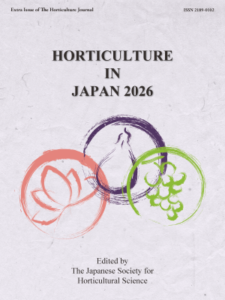
Extra Issue of The Horticulture Journal: HORTICULTURE IN JAPAN 2026
Edited by The Japanese Society for Horticultural Science
First published in Japan in 2026
Shokadoh Book Sellers
146 Nishiojicho Ogawahigashi-iru, Shimodachiuri, Kamigyo-ku, Kyoto 602-8048, Japan
© 2026 The Japanese Society for Horticultural Science (JSHS).
ISBN: 978-4-87974-803-4 C3045
Typeset and printed by Nakanishi Printing Co., Ltd.
Bound by Shiki Seihon
This publication was supported by JSPS KAKENHI Grant Number 24HP2002.